Text 4 Each suburban housewife,wrote Betty Friedan in 1963,struggles with a single quesLion as she makes the beds,shops for groceries,drives children to school and lies beside her husband at night:"Is this all?"A few years after her ground-breaking book The Feminine Mystique was published,the Cen8us Bureau began collecting data on the proportion of mothers who opt to stay at home.Over the subsequent decades the statistics answered Friedan's question with a heartfelt no.In 1967 the share of mothers who did not work ouLside the home stood at 4996;by the turn of the millennium it had dropped to just 23%.Many Lhought this number would continue to fall as women sought to"have it all".Instead,the proportion of stay-at-home moLhers has been rising steadily for the past 15 years,according to new data gathered by the Pew Research Centre.This partly reflects demographic change.Immigrants,a rising share of Lhe relevant generation,are more likely to be stay-at-home mums than women born in America.There is an economic component to the change,too:at the end of the 1990s,when mothers staying at home were at Lheir rarest,the economy was creating so many jobs that most people who wanted work could find it.Now more report that they are unable to do so,or are studying in the hope of finding work later.But there is also an element of choice:a quarter of stay-at-home mothers have coUege degrees.Taken as a whole,the group includes mothers at both ends of the social scale.Some are highly educated bankers'wives who choose not to work because they don't need the money and would rather spend their time hot-housing their toddlers so that they may one day get into Harvard.Others are poorer but calculate that,after paying for child care,the money they make sweeping filoors or serving burgers does not justify the time away from their little ones.he first group is fturly small.Pew estimates that there are 370,000 highly educated and afflu-ent slay-at-home mothers(defined as married mothers with children under 18 who have at least a master's degree and family income in excess of$75,000).That is 5%of all stay-at-home mothers with working husbands.One third of stay-at-home moLhers are single or cohabiting,and on average they are poorer than the rest.
This text mainly centers on housewives______
- A.family and social background
- B.reasons for not going to work
- C.disparity of economic status
- D.proportion and situations
正确答案及解析
正确答案
解析
主旨题。本文第一段以Betty Friedan引出家庭主妇的话题;第二段指出数十年来家庭主妇比重的变化:第三段分析家庭主妇越来越多的原因:最后两段描写家庭主妇的几个不同群体和状况。能够概述全文的是选项[D]proportion and situations“比重和状况”。而[A]family and social background“家庭和社会背景”;[B]reasons for not going lo work“不工作的理由”;[C]disparity of economic status“经济状况的差异”;这三项均无法概括全文。故本题选择[D]。
包含此试题的试卷
你可能感兴趣的试题

-
- A.1.7
- B.1.9
- C.2.1
- D.2.0
- 查看答案
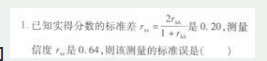
-
- A.0. 60
- B.0.50
- C.0. 12
- D.0.20
- 查看答案
如何理解今年一季度经常账户逆差的原因和影响?
- 查看答案
M 公司是一个无负债公司,其每年预期税息前收益为 10000 元,股东要求的 权益回报率为 16%,M 公司所得税率为 35%,但没有个人所得税,设所有交易 都在完善的资本市场中运行,问: A.M 公司的价值为多少? B.如果 M 公司借入面值为无负债公司价值的一半的利率为 10%的债务,债务 没有风险,并且所筹集的债务资金全部用于赎回股权,则此时公司的价值变为多 少?而权益资本成本为多少
- 查看答案
中美贸易失衡的原因并评价特朗普的贸易政策?
- 查看答案